



Language resources
Structured vocabulary, meanings, examples, linguistic metadata and other resources that help machines work with Assamese more accurately.
Axomiya AI Foundry is an open-source initiative focused on building the language resources, datasets, speech resources and research infrastructure Assamese needs to participate fully in the AI era.
Modern AI systems are becoming increasingly capable of working with language, speech and knowledge. But powerful models alone do not guarantee that every language receives the same depth of representation.
Assamese needs its own openly accessible foundation: high-quality text, authentic speech, useful linguistic resources, carefully documented datasets and infrastructure that researchers and developers can inspect, improve and build upon.
Axomiya AI Foundry exists to help build that foundation.
The goal is not to replace existing AI systems. The goal is to make Assamese language resources stronger, more accessible and more useful so that future AI systems can work with Assamese language and cultural context more effectively.
The Foundry brings together language, speech, datasets and community knowledge into practical resources for the next generation of Assamese technology.
Structured vocabulary, meanings, examples, linguistic metadata and other resources that help machines work with Assamese more accurately.
Documented datasets that researchers, developers and communities can inspect, use, improve and build upon.
Authentic Assamese recordings and verified transcriptions for speech recognition, synthesis and language research.
Open foundations that make Assamese language technology easier to research, develop and extend.
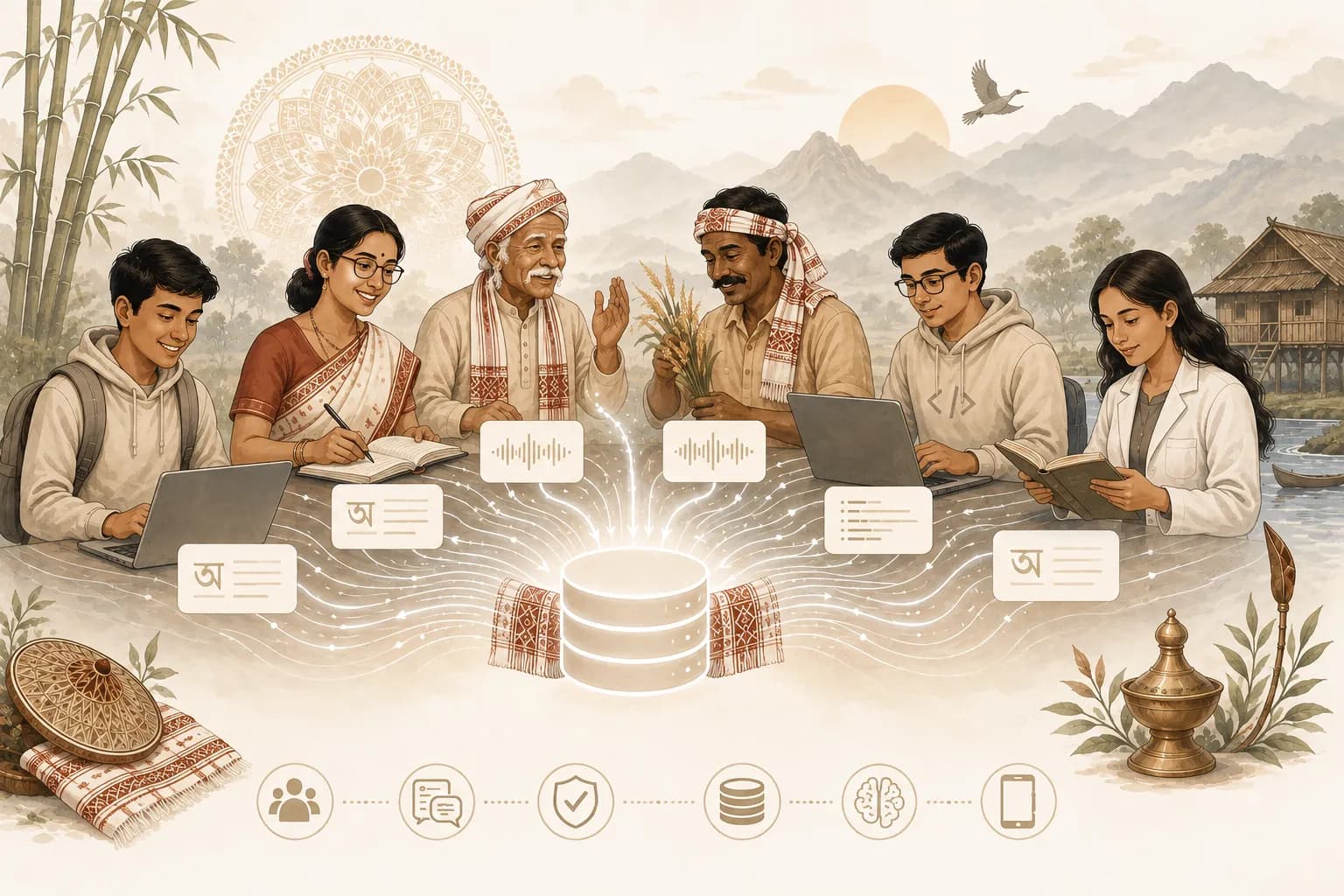
Native speakers, students, educators, researchers, developers and contributors all have a role to play. Language quality cannot be created by technology alone. It requires people who understand the language, its expressions, its history and its living cultural context.